
Head Outdoors!
A flexible learning journey integrating psychology, natural science, creative practice and practical outdoor skills.
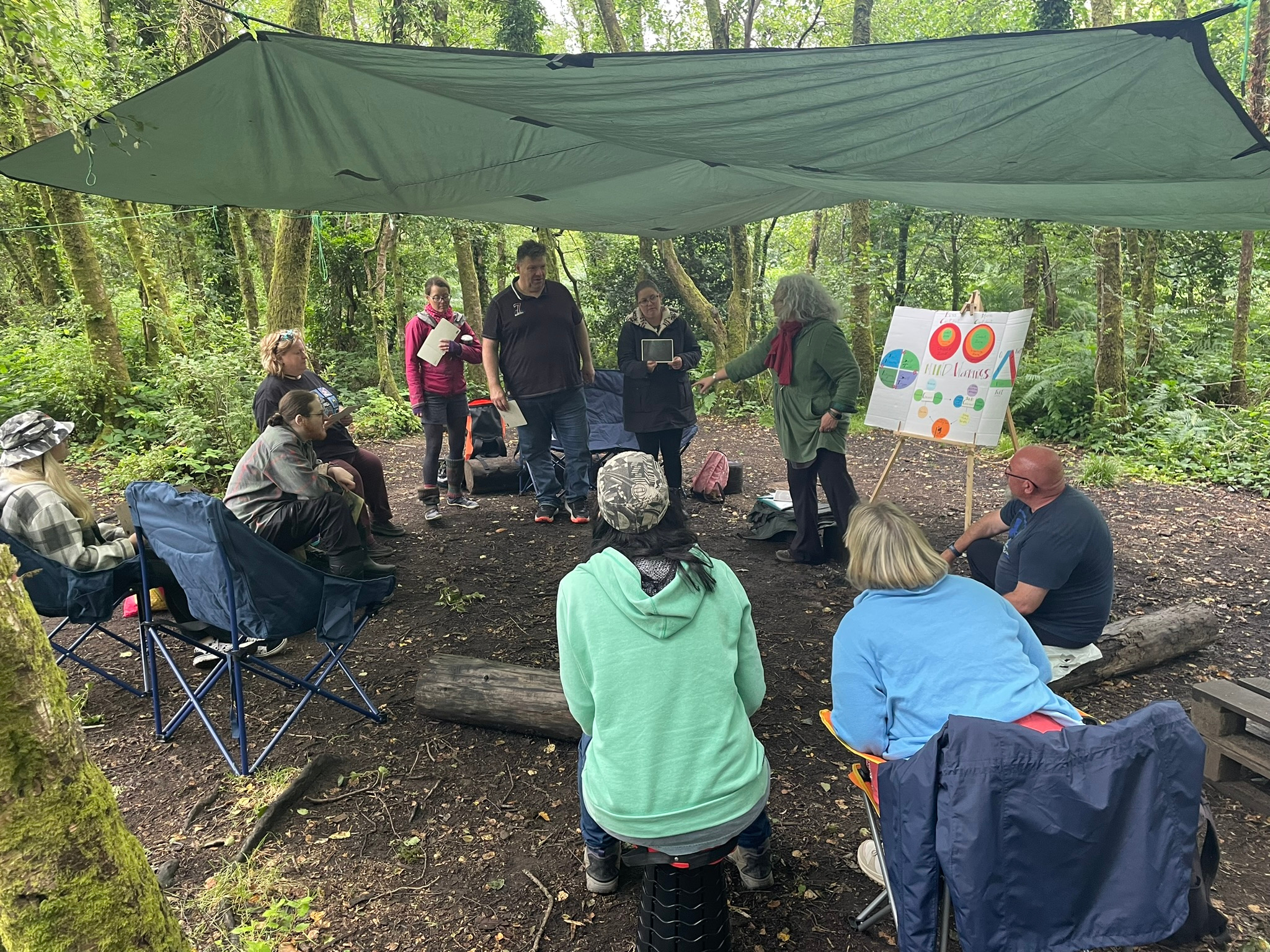
Head Outdoors can work as a standalone programme or as part of a longer pathway alongside Heads Up!. Its distinctive approach brings together accessible psychology, natural science, arts and crafts-based learning and practical outdoor skills.
Three core sessions establish the programme’s psychological and nature-based foundations. We then mix and match from a wider bank of optional sessions, adapting each programme around the group, setting, season, accessibility needs and partnership aims.
One programme or a connected pathway
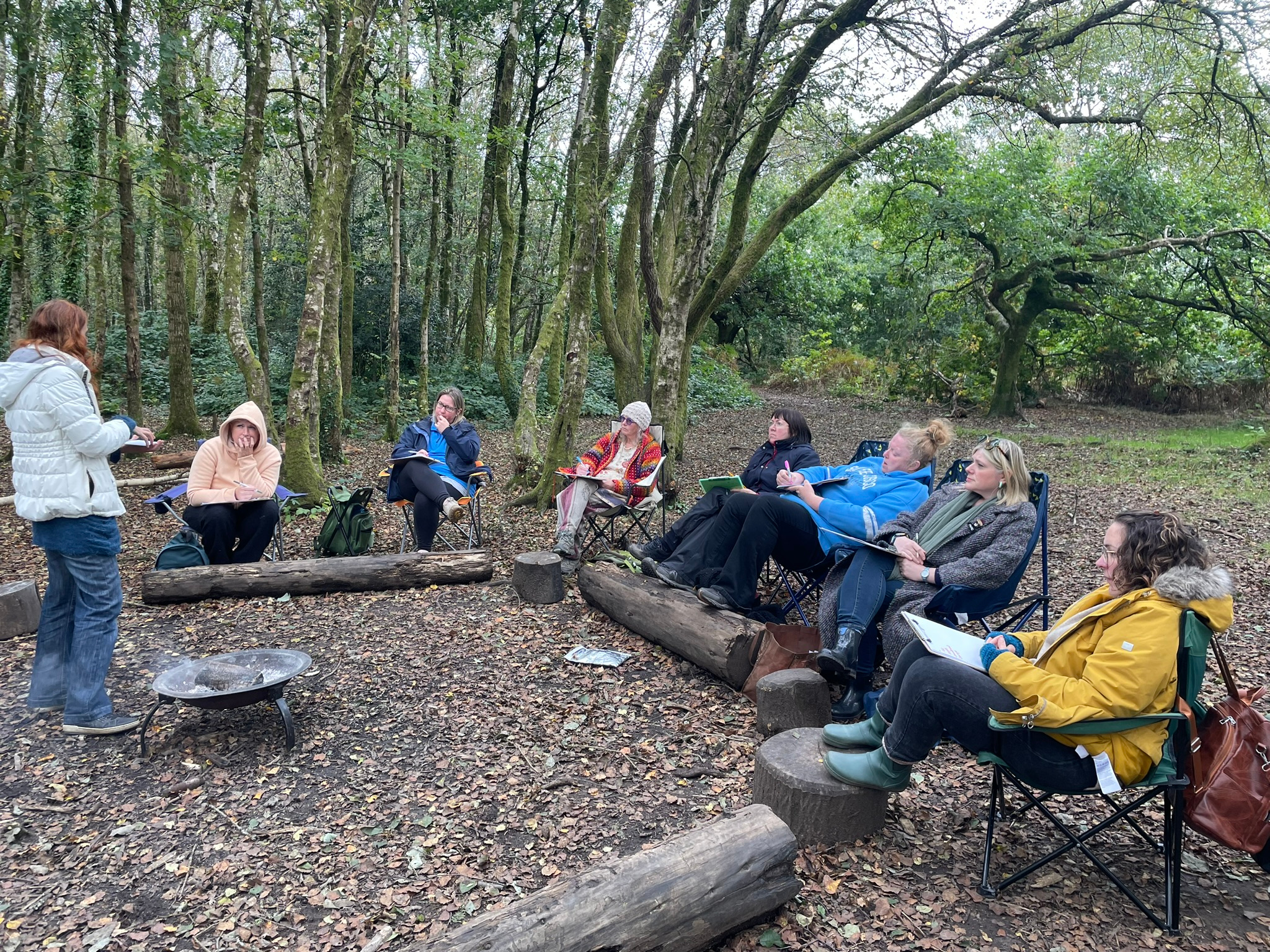
Head Outdoors can be run as a standalone programme or as part of a joined-up pathway with Heads Up!, therapeutic coaching and other community support.
Explore the programme design
Head Outdoors began after organisations told us that, although South Wales had many valuable outdoor programmes, some people were finding them difficult to access. Existing opportunities were not always specifically designed for people experiencing mental health challenges or delivered in a trauma-informed way.
We initially designed Head Outdoors as bridging support: a psychologically informed programme where people could build confidence, feel safe outdoors and then connect with other local opportunities and services.
Through repeated delivery, we learned that participants particularly valued the depth created by bringing psychology and nature learning together. Head Outdoors therefore became a learning journey in its own right, while continuing to help people move towards other activities, volunteering and community connections.
How the programmes connect
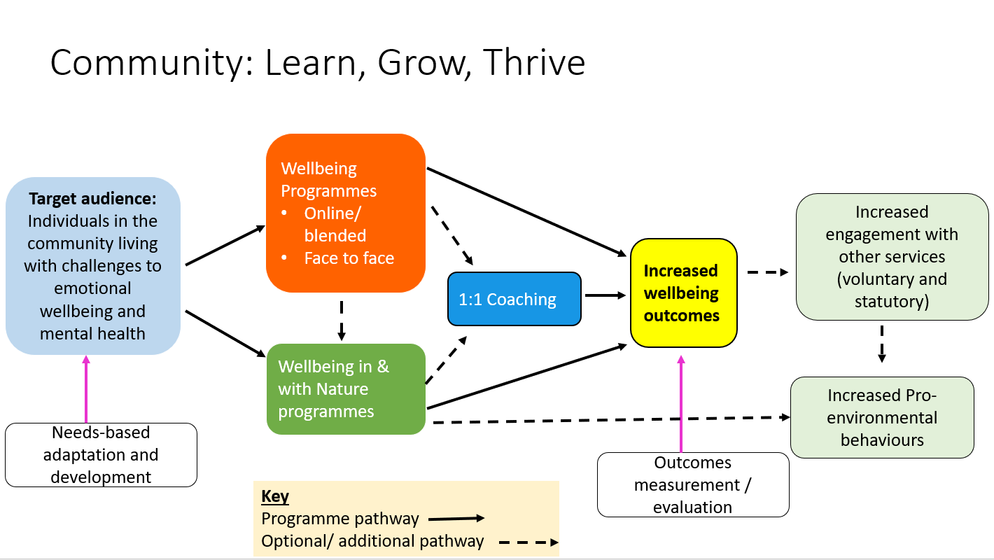
People can join Head Outdoors directly, or move into it after Heads Up! as their confidence, trust and readiness to take part outdoors develop. The pathway is flexible and can include therapeutic coaching and links to other community services.
What’s in the programme
Head Outdoors is not a prescribed five-session sequence. Every programme begins with three core sessions, then we select from a wider session bank to create the right mix for the people taking part. Psychology, natural science and creative learning are woven together throughout.
Core sessions
1. Nature and the Nervous System
Psychology, natural science and creative techniques come together to explore how nature can support regulation and a greater sense of safety.
- Understand the nervous system and the body’s response to stress
- Explore grounding and how familiarity with a place can help us feel safer
- Discover how phytoncides and fractal patterns may support wellbeing
- Use arts-based and sensory activities to make the learning practical and memorable
2. Return to My Trees (Dod yn ôl at fy nghoed)
Inspired by the Welsh phrase dod yn ôl at fy nghoed, literally “to return to my trees”, and its meaning of returning to a balanced state of mind.
- Explore awareness, connectedness and self-care through the language of trees
- Combine mindful noticing with practical tree identification
- Learn how trees communicate through mycelial networks and use this as a metaphor for connection and the nervous system
- Explore tree symbolism and folklore from Wales and other cultures, and consider how these stories can help us support ourselves
3. Bird Chatter & The Brain
Bird identification and the psychology of unhelpful thinking patterns.
- Explore links between thoughts, emotions, physical responses and behaviour
- Recognise common unhelpful thinking patterns without self-blame
- Practise ways to pause, check and respond differently
- Identify local birds through appearance, behaviour, habitat and sound
Optional sessions
We mix and match these depending on the group, location, season and what participants want to explore.
Campcraft & Confidence
Practical outdoor skills, confidence and motivation.
- Explore how confidence grows through experience, manageable challenge and repeated success
- Try campcraft skills suited to the setting, season and group
- Recognise existing strengths while learning alongside others
Navigation & Moving Forward Positively
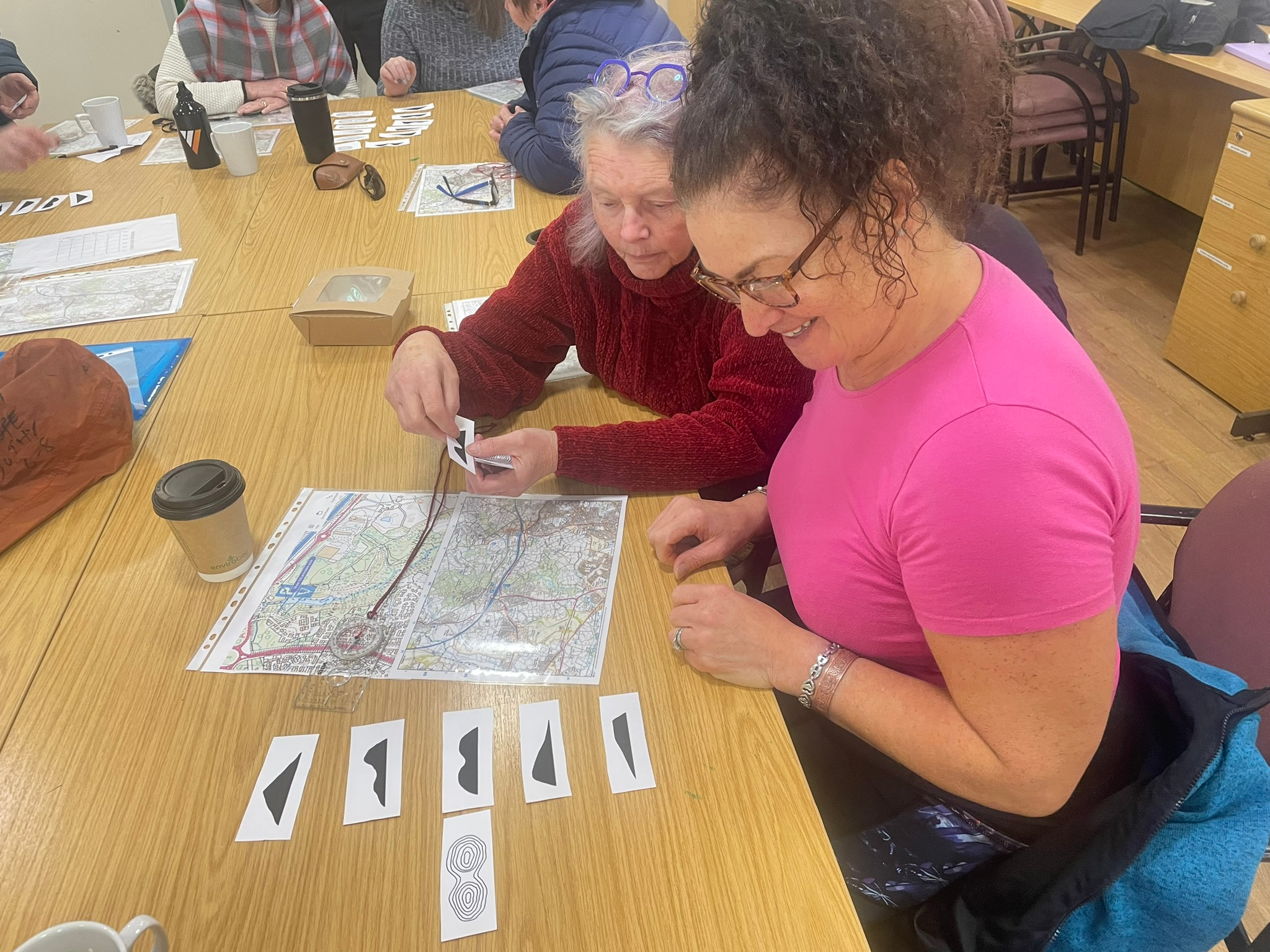
Navigation in nature becomes a practical way to explore direction, uncertainty and positive next steps.
- Develop introductory navigation and route-planning skills
- Explore decisions, changing direction and finding a way forward
- Identify strengths, supportive connections and manageable next steps
Mindfulness & Mindful Photography
An accessible introduction to mindfulness, explored practically through photography.
- Unpick the different elements of mindfulness
- Experiment with attention, perspective and noticing
- Explore mindful photography in the woodland or an indoor setting
- Use everyday cameras or phones. No photography experience is needed
Nature Journalling for Wellbeing
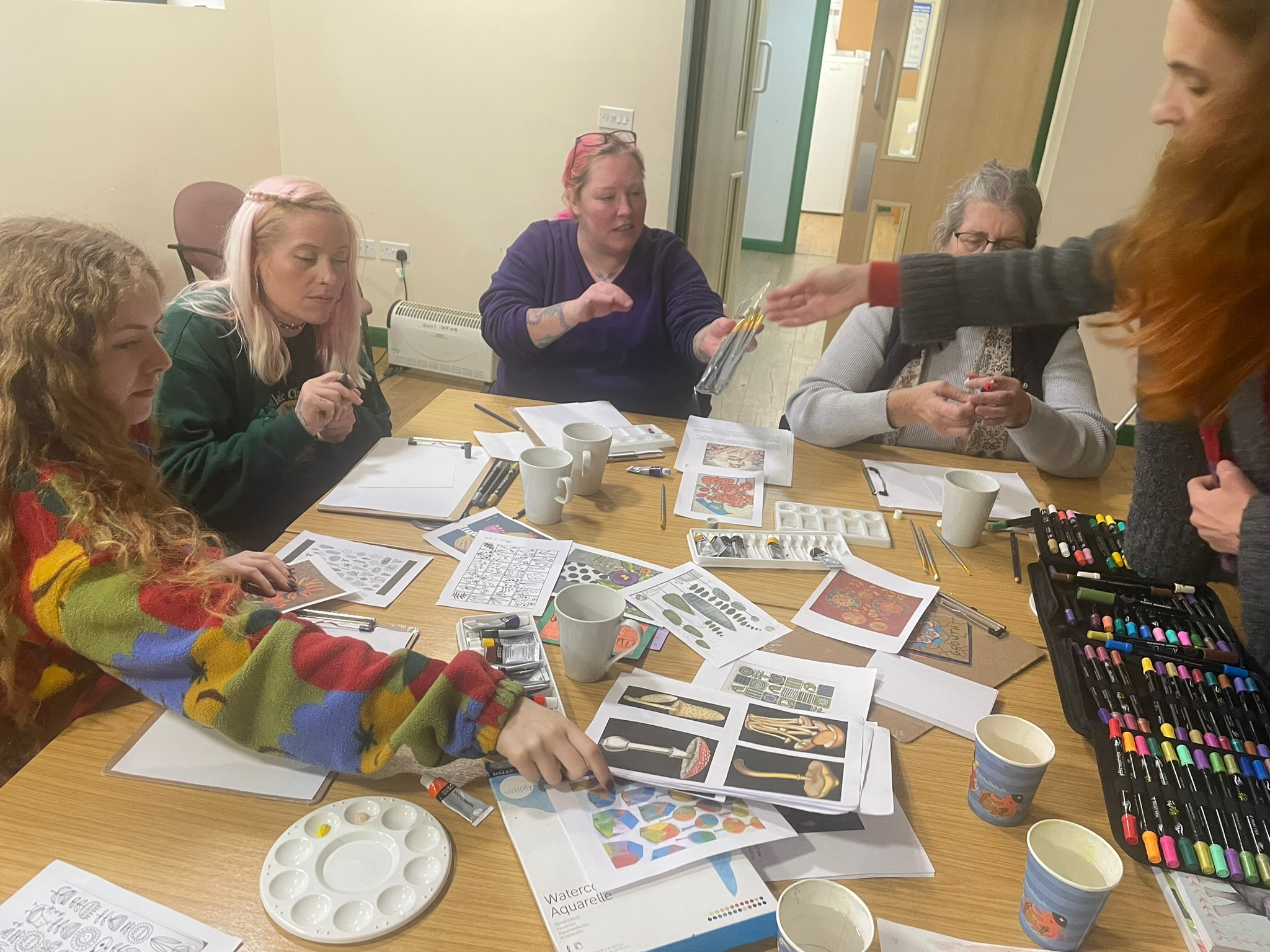
A multimedia session using observation, words and accessible art-making to support connection and expression.
- Try natural science-based observation and surveying techniques that can also support wellbeing
- Explore creative writing approaches
- Experiment with accessible mark-making, painting and drawing
- Create without pressure, judgement or the need for previous artistic experience
Self-Compassion & Flow State
A deeper exploration of self-compassion and the wellbeing benefits of becoming absorbed in a meaningful activity.
- Explore awareness, connectedness and self-kindness
- Understand how flow develops through a balance of challenge and skill
- Experiment with arts-based techniques in the woodland
- Notice how flow can support attention, expression and wellbeing
Multisensory Gratitude Practice
Gratitude through a neuroscience lens, followed by playful audio, visual and sensory exploration in nature.
- Explore what research tells us about gratitude and longer-term mental health
- Experiment with listening, looking and shifting perspective
- Use woodland sounds, scenes and sensory details to develop personal appreciation practices
Nature, Metaphor & Meaning
A Jungian-informed exploration of how nature, signs, symbols and metaphor can deepen our connection with ourselves and the natural world.
- Explore how metaphor can help us recognise and appreciate different aspects of ourselves
- Play with signs and symbols found in nature without imposing a single meaning
- Use natural materials and creative practice to express ideas that can be difficult to put into words
- Create personal metaphors that connect with the wellbeing outcomes and changes participants want to work towards
Who we have worked with
Head Outdoors began for people in the wider community experiencing anxiety, low mood, depression, trauma and grief.
We have developed tailored versions with and for survivors of domestic abuse, including women-only groups, and university students.
Each version is shaped with the partner and community involved while retaining the programme’s trauma-informed approach and its core combination of psychology and nature learning.
We run the majority of Head Outdoors sessions at Penllergare Valley Woods, working with Penllergare Woodland Trust, as well as at other sites across Gower.
What people say about Head Outdoors
Everyone’s experience is individual, but participants have consistently described meaningful changes in how they understand themselves, relate to nature and approach the next steps in their lives.
Explore outcomes and participant stories
Participants have described:
- Greater confidence to leave home and spend time outdoors
- A clearer understanding of stress and the nervous system
- Increased self-compassion and a kinder internal voice
- More confidence to try unfamiliar activities
- Improved knowledge of local nature and wildlife
- Stronger connection with other people and the natural world
- More motivation to join community activities or volunteering
- Greater hope and confidence about the future
“Happy Headwork changed my life! I couldn’t leave the house in January, I was so anxious. I did Heads Up! and started to feel better, then Head Outdoors! was off the scale.”Participant on Heads Up! and Head Outdoors!
Interested in Head Outdoors?
Programmes run at different times depending on funding, partnerships, location and available places. We also work with organisations to develop versions for the communities they support.